
My Research
Governing for sustainability in an era of shared mobility
Eight years ago Uber didn’t exist. Five years ago dockless bikesharing systems didn’t exist. Three years ago shared electric scooters didn’t exist.
We put our trust in elected officials to steer (govern) the direction in which society is moving, but how can these public officials deal with technologies and services that just come out of the blue and get dumped in our cities?
This is the basic premise of my research: can we come up with better governance tools for public sector officials to regain control of our societal future and steer it towards a path of sustainability?
Does this topic catch your attention? then read on!
A hypothesis:
The way in which public sector officials govern shared mobility has implications on how sustainable these solutions actually are
How are cities managing shared mobility today?
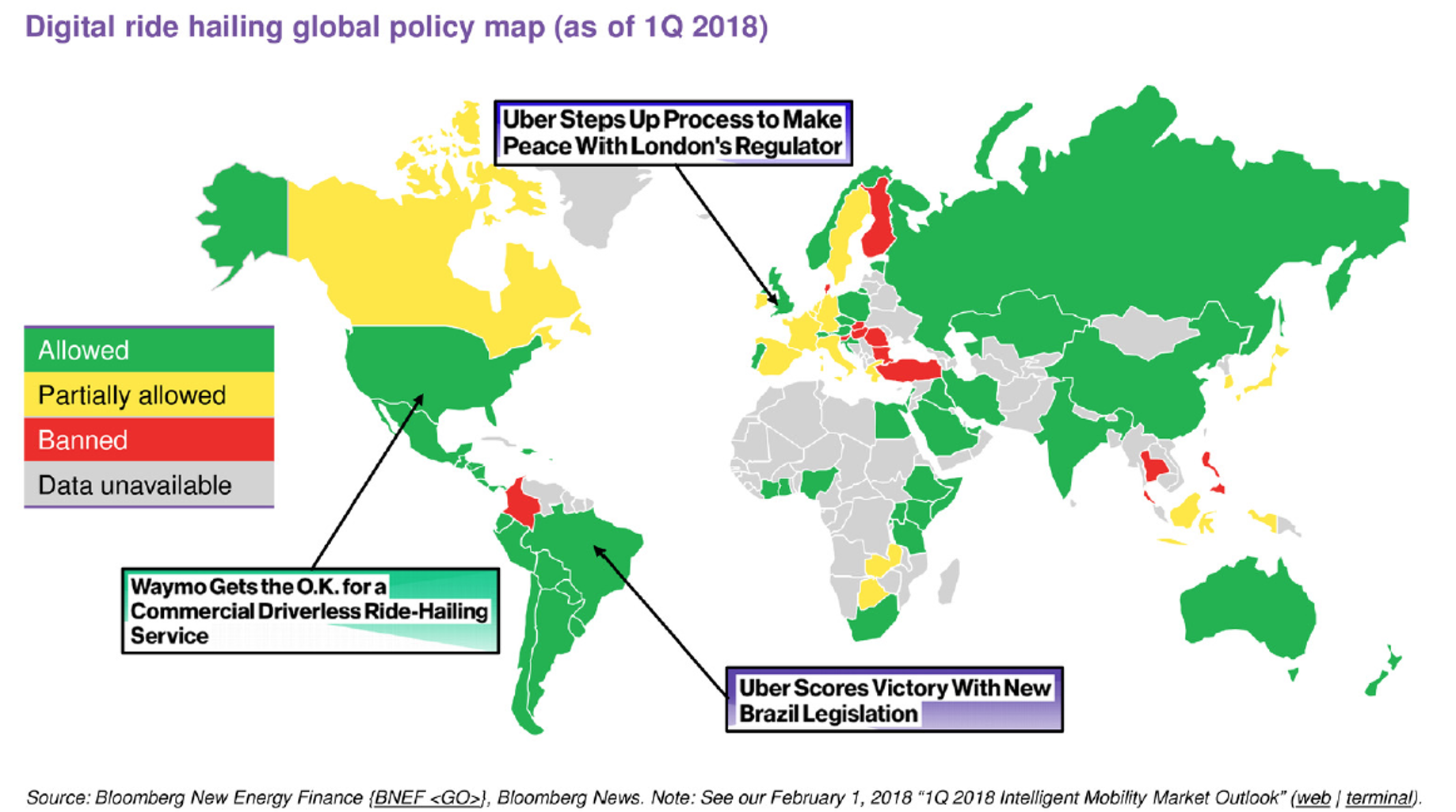
Cities have been taking different approaches when it comes to the regulation of shared mobility. Some cities have banned it, some cities have embraced it, while some others don’t know what to do with it. But regulation is but one aspect of governance. Governing involves much more than just enacting a rule. Governing is the management of complex networks of stakeholders, which in turn requires well-prepared and capable officials. Understanding governance approaches requires in-depth engagement with cities.
But what does “governing for sustainability” actually mean?
There seems to be a widespread understanding that sustainability means green. This is true to a certain extent, but when talking about the transport sector, sustainability has deeper implications. A transport system cannot be sustainable unless it’s pursuing its basic function: providing access to the basic necessities of the population. For my research, a sustainable transport system is, first and foremost, one that improves access to the poor, and that does it in an environmentally sustainable way. Once these two conditions are met, it can also support economic development, which is the third pillar of sustainability.
There’s no PhD without ‘Ph’
I believe that reality exists. I don’t think reality is a social construct. But I have seen first-hand the damage that positivism has done to the transport profession. The belief that for the transport profession to be credible it has to find universal laws that govern the movement of people is simply ludicrous. So how do you marry the existence of reality with an understanding that transport is not a physical science? Enter Critical Realism (CR). CR accepts that reality exists however we cannot observe it directly. This means that we need to be creative with the tools that we use to uncover reality. There are no universal laws that govern society in CR, rather there are demi-regularities that cannot be replicated blindly elsewhere because the context in which they happen plays an important role.
Proposing better governance tools
In my research, I am conducting case studies to understand why some governance approaches and tools might be better than others when governing for sustainability. I am using a CR metatheory of science to uncover what are the mechanisms that different governance tools activate in order to propose better ways of creating public policies and steering governance networks.